

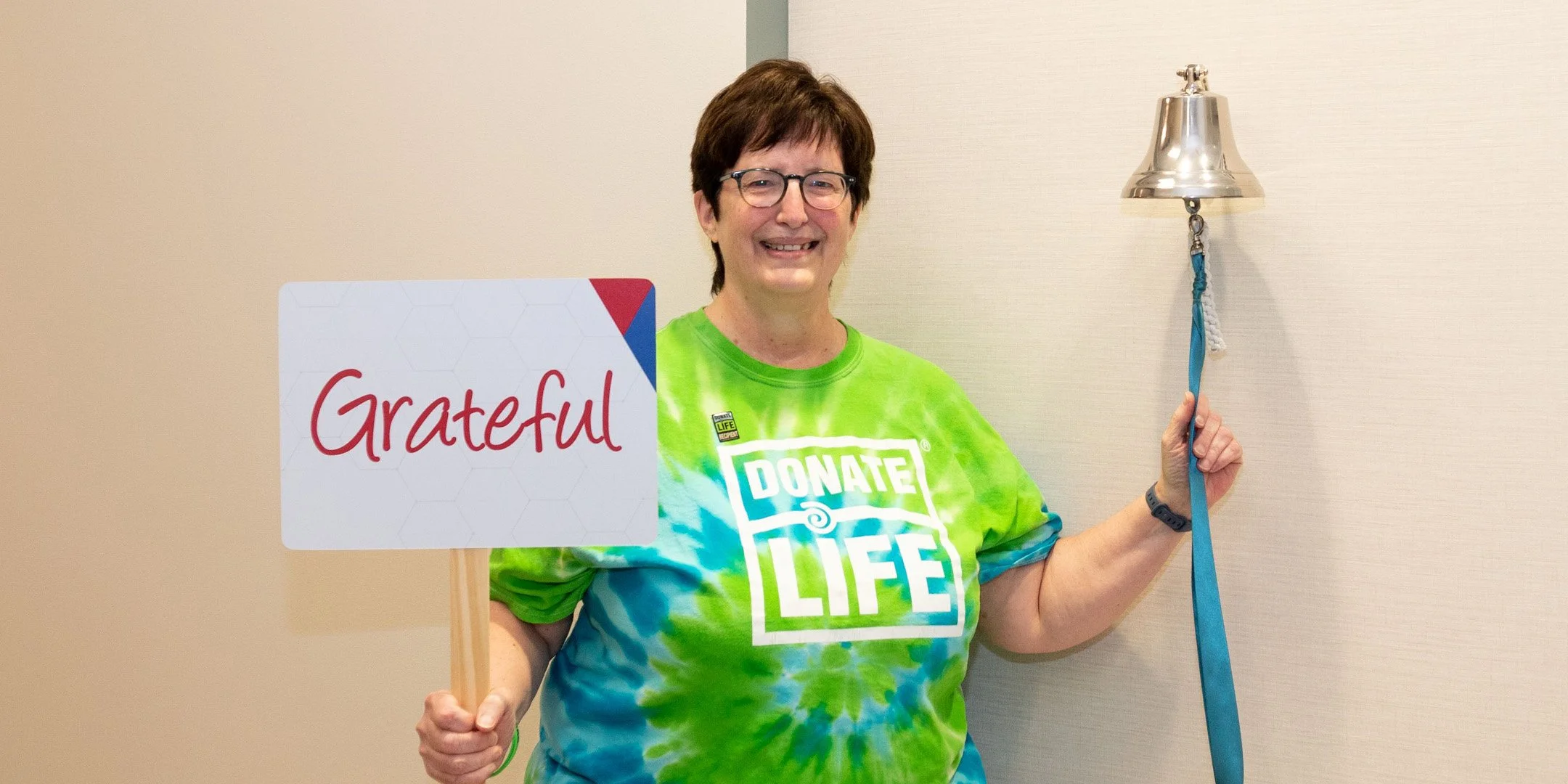
Time to chime: in celebration of transplant or donation anniversaries, patients and special guests are invited to ring the Bell of Hope and Gratitude.
UW Health Transplant Center Research Update
Wednesday, May 27
6:30–8:30 p.m.
6:30–7 p.m.
Check-In and Light Refreshments
7–8 p.m.
Program
8–8:30 p.m.
Q & A Session
Health Sciences Learning Center, Lecture Hall 1325
750 Highland Avenue
Madison, WI 53705
Free to attend
RSVP by May 20
Space is limited.
Xenotransplantation: Opening the Door to New Lifesaving Surgery
Join the UW Health Transplant Center team to examine the latest progress in xenotransplantation during this in-person Transplant Research Update on May 27. It’s an exciting time of discovery — when successfully transplanting animal organs into human bodies is closer than ever to becoming an everyday reality. You’ll learn from UW experts about the promise and importance xenotransplantation holds and how the UW Health Transplant Center team is closing in on breakthroughs in the field. This is a great opportunity to gain valuable insights and an appreciation for the generosity of donors who help make such advances possible.
Scheduled Speakers and Topics:
Melissa Roberts, Senior Administrative Director with UW Health Transplant Center. Melissa will provide you with a leadership update.
Joshua Mezrich, MD: professor and the Mark A. Fischer Chair in the Division of Transplantation at the UW’s School of Medicine and Public Health
Preview Dr. Mezrich’s upcoming book, Every Living Creature: How Xenotransplantation Will Change Our Lives, which focuses on the history and promise of inter-species organ transplantation.
David Foley, MD: Folkert O. Belzer Chair in the UW’s School of Medicine and Public Health Division of Transplantation
Explore Dr. Foley’s study on porcine liver xenotransplantation/perfusion and his research on therapies that can decrease damage and improve organ function after liver transplantation.
David Aufhauser, MD: assistant professor and a transplant surgeon in the Division of Transplantation at the UW’s School of Medicine and Public Health
Delve into Dr. Aufhauser’s research on how to make organs more viable for transplant through normothermic regional perfusion and xenotransplantation and learn about his work on the shortage of human donor organs.
Location:
Health Sciences Learning Center, Lecture Hall 1325
750 Highland Avenue
Madison, WI 53705
Free parking is available in Lot 60. (Enter from Walnut Street.)
Paid parking is available in the University Hospital ramp, Lot 75 (610 Highland Avenue).
Questions?
Email Mary Jo Spalinger or call 608-381-3150.